
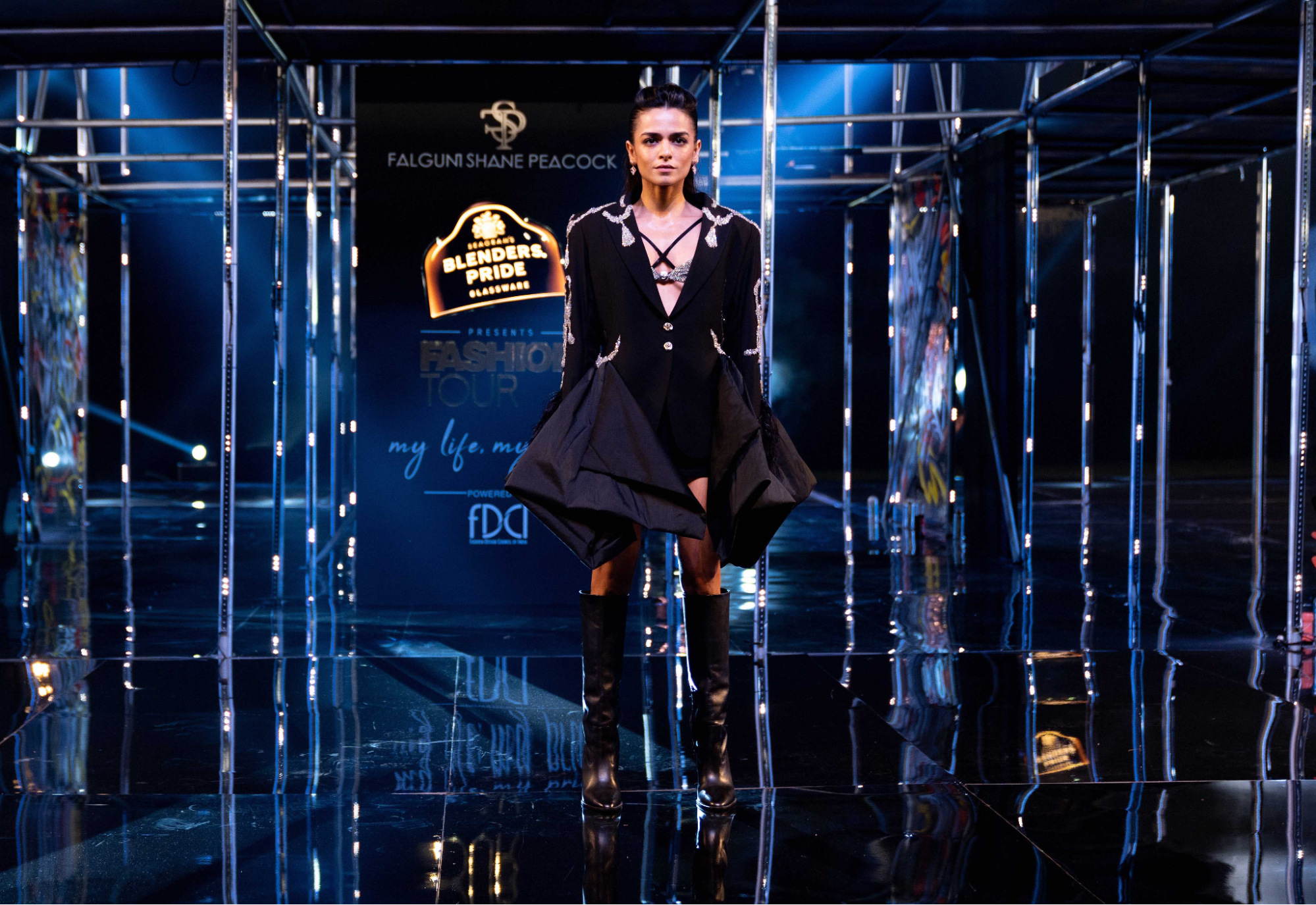
A long, straight catwalk, an audience of silent observers seated in neat rows, and a procession of models presenting a designer’s vision in a one-way broadcast of style, that’s how our collective consciousness perceives a fashion show. It’s an exclusive, distant, and spoke a language understood by a select few. Today, however, that very foundation is being shaken, redesigned, and rebuilt. The traditional runway is making way for a dynamic, multi-sensory spectacle. We are entering an era where fashion is not just seen but felt, heard, and experienced.
Interactive fashion events are fundamentally reshaping the landscape of runway fashion, transforming it from a passive viewing into an active, immersive engagement. This evolution is more than a fleeting trend; it’s a direct response to a new generation of consumers who crave authenticity, participation, and storytelling. They don’t just want to buy a product; they want to buy into a world. This global shift is being powerfully championed in India, with platforms like the Blenders Pride Fashion Tour leading the charge, demonstrating that the future of style is a conversation, not a monologue.
From Catwalk to Canvas: The New Experiential Model
The traditional runway, for all its glamour, operated on a simple, linear principle. It was a vehicle for displaying clothes, a one-dimensional showcase where the audience’s role was purely observational. The new model, however, treats the entire event as a canvas for a much larger artistic statement. The shift is driven by a digitally native audience that values experiences over possessions and authenticity over aspiration. In a world saturated with social media, where everyone has a platform, fashion can no longer afford to be behind a velvet rope. It needs to be a dialogue.
This new format is not just about the clothes; it’s about the context created around them. It’s a multi-sensory experience that combines fashion with music, art, technology, and even gastronomy to build a complete universe for the collection to inhabit. The goal is no longer just to present a silhouette but to evoke an emotion, tell a story, and create a memory that lingers long after the final model has left the stage.
The Pillars of Interactive Fashion: A Deeper Dive
This revolution in fashion runway is built on several key pillars that transform a simple show into a cultural moment. The Blenders Pride Fashion Tour, in its collaboration with the Fashion Design Council of India (FDCI), provides a compelling case study of these principles in action.
1. Beyond the Catwalk: Immersive Environments
The most significant change is the dissolution of the traditional stage. Today’s most innovative fashion events create entire worlds for their collections. The venue is no longer a neutral backdrop but an active participant in the narrative. A prime example was the tour’s magnificent tribute to the legendary Rohit Bal in Gurugram. This was not merely a show; it was described as an “immersive celebration” of his creative universe. The experience was holistic, featuring Kashmiri culinary experiences and soulful music that perfectly mirrored Bal’s opulent, heritage-rich aesthetic. With over 100 prominent figures walking in his honour, it became a living, breathing fashion exhibition of his legacy.
Similarly, designer Tarun Tahiliani unveiled his ‘Dreamscape’ collection not on a standard runway, but on a “majestic floating runway set against the breathtaking Mumbai coastline.” This audacious choice transformed the show into a cinematic spectacle, where the natural beauty of the environment enhanced the ethereal and glamorous nature of his designs. The setting wasn’t just a place; it was part of the fantasy.
2. The Fusion of Art Forms
In this new era, fashion doesn’t exist in a vacuum. It is increasingly presented as a collaborative art form, a nexus where different creative disciplines converge. Live music, in particular, has become a powerful tool for amplifying a collection’s energy and message. In Chandigarh, designer Kanika Goyal’s showcase of edgy, street-luxe fashion was elevated by a live performance from the folk-tronic duo Hari & Sukhmani. They performed directly on the runway, their music syncing perfectly with the energetic rhythm of the collection, creating a cohesive and vibrant audio-visual experience.
This synergy was taken even further at the grand finale in Guwahati. The “Play En-Vogue” concept saw live performances from acclaimed rappers KR$NA and KARMA, who amplified the distinct aesthetics of the designers. Their music wasn′t just background noise; it was seamlessly woven into the presentation, with KR$NA’s beats complementing the rockstar vibe of Abhishek Patni’s NoughtOne collection, and KARMA’s flow matching the dramatic storytelling of Nitin Bal Chauhan’s designs. This fusion turns a fashion show into a concert, a performance, and a cultural event all at once.
3. Technology as the New Textile
Perhaps the most forward-looking aspect of this revolution is the integration of technology, not just in the presentation but in the garments themselves. Designer Akshat Bansal’s label, Bloni, offered a stunning glimpse into this future in Vizag. His collection was a masterclass in innovation, incorporating “AI-generated visuals, 3D-modeled elements, and cutting-edge textiles.” The showstopper moment came with the use of “photochromatic technology, which transformed outfits in real time” as they moved under the lights.
Here, the clothing itself became interactive. The audience wasn’t just watching fashion; they were witnessing a technological marvel. This dialogue between technology and self-expression, heightened by the pulsating live music of Ritviz, showcased how fashion is evolving beyond mere fabric and thread into a dynamic medium of futuristic expression.
The Democratization of Style
For years, high fashion was an exclusive club. Interactive fashion events are kicking the doors open. By moving beyond traditional fashion capitals and embracing a multi-city tour model—visiting places like Gurugram, Chandigarh, Mumbai, Vizag, and Guwahati—the Blenders Pride Fashion Tour 2025 made cutting-edge style accessible to a much broader audience of young, aspirational Indians. This decentralization is crucial; it acknowledges that style and creativity are not confined to a few metropolitan postcodes.
Furthermore, these events are perfectly designed for the social media age. Every attendee with a smartphone becomes a content creator, a broadcaster, and a critic. The immersive sets, celebrity showstoppers like Sonam Kapoor, Jacqueline Fernandez, Tiger Shroff, and Ishaan Khatter, and unique artistic fusions are inherently shareable. This extends the reach of the event exponentially, transforming a showcase for a few hundred people in a room into a global digital conversation. In this sense, these events function as a pop-up fashion exhibition, a curated experience that is documented and disseminated across the world, making everyone a part of the front row.
A New Playground for Designers
This evolution isn’t just for the audience; it offers designers a vastly expanded creative playground. They are no longer limited to expressing their vision through garments alone. They can now act as creative directors of a complete experience, using music, lighting, set design, and technology to tell a richer, more nuanced story.
This was evident in the collections at the Guwahati finale. Nitin Bal Chauhan used the platform to present ‘CHAMUNDA,’ a powerful narrative that reinterpreted medieval armour for modern streets. As he noted, the tour is a “powerful platform for storytelling through fashion.” Similarly, Abhishek Patni’s ‘Racer 01’ collection for NoughtOne was more than just streetwear; it was an entire aesthetic fusing rockstar energy with high-end design. Pawan Sachdeva’s ‘The Dis-Aligned’ collection used the platform to showcase controlled chaos and innovative techniques, disrupting traditional forms. These designers aren’t just making clothes; they’re building worlds and inviting us in.
Conclusion: The Experience is the New Style
The message is clear: the future of runway fashion is interactive, immersive, and inclusive. The static, silent catwalk is being replaced by a vibrant, living stage where the lines between creator, performer, and audience are beautifully blurred. Fashion shows like the Blenders Pride Fashion Tour are not just showcasing trends; they are setting a new standard for what a fashion event can and should be. By blending global influences with local culture, fusing art forms, and embracing technology, we prove that fashion is at its most powerful when it is a shared experience.
As we look ahead, this trend will only accelerate. We can anticipate even deeper levels of personalization, the integration of virtual and augmented realities, and more opportunities for the audience to directly influence the narrative. The future of style is not just about what you wear, but how you connect with it. It’s a story, a performance, and a memory—and we are all invited to be a part of it.