
In the digital age, a new outfit is always just a click away. You see an influencer sporting a trendy jacket, and within minutes, a nearly identical version can be added in your online cart. This is the magic of the modern fashion landscape, a world dominated by a powerful, fast-moving force. But behind the instant gratification lies a growing debate, a quiet but persistent revolution that pits two philosophies against each other: fast fashion versus slow fashion. Your choices, as a consumer, are the deciding vote in this battle for the future of style.
Let’s explore the origins, impact, and alternatives to our current fashion habits. We’ll also look at how influential platforms like the Blenders Pride Fashion Tour are shifting the narrative, celebrating craftsmanship and individuality in a way that challenges the very core of disposable style.
The Allure of Speed: What is Fast Fashion?
So, what is fast fashion? In essence, it is a business model that prioritizes speed and low cost to deliver constant streams of apparel collections inspired by the latest runway or celebrity trends. Think of it as fashion on overdrive. Where traditional fashion houses once operated on two main seasons a year (Spring/Summer and Autumn/Winter), fast fashion brands can drop new “micro-seasons” weekly, creating a constant sense of newness.
The model is built on a simple premise: make style accessible and affordable for everyone. The result is an endless cycle of production and consumption, driven by the powerful engine of the fast fashion trend.
A Quick Look Back: The History of Fast Fashion
To understand its dominance, we need a brief glimpse into the history of fast fashion. Before the 19th century, clothing was a slow affair. Garments were made-to-order by skilled artisans, a process that was time-consuming and expensive. The Industrial Revolution introduced mass production and standardized sizing, making clothing more accessible, but the true acceleration happened in the late 20th and early 21st centuries.
Companies like Zara and H&M pioneered a super-efficient supply chain model. They could design, produce, and stock a new garment in a matter of weeks, a stark contrast to the months-long timeline of traditional fashion. This agility, combined with offshore manufacturing to reduce costs, created the perfect storm for fast fashion’s global takeover.
The Rise of a Conscious Counterpart: What is Slow Fashion?
In response to the whirlwind of fast fashion, a counter-movement of slow fashion has emerged. It’s an approach to fashion that advocates for awareness and intention in our sartorial choices. It emphasizes quality over quantity, timelessness over trends, and ethics over expediency.
Slow fashion encourages us to:
-
Buy Less, Choose Well:
Invest in high-quality, durable pieces that will last for years, not just a season.
-
Value Craftsmanship:
Appreciate the skill and artistry that goes into making a garment, from the design to the final stitch.
-
Embrace Sustainability:
Opt for eco-friendly materials and production processes that minimize harm to the environment.
Slow fashion isn’t about looking plain or unfashionable; it’s about curating a personal style that is thoughtful, sustainable, and truly your own.
Bridging the Gap: Where High Fashion Celebrates Substance
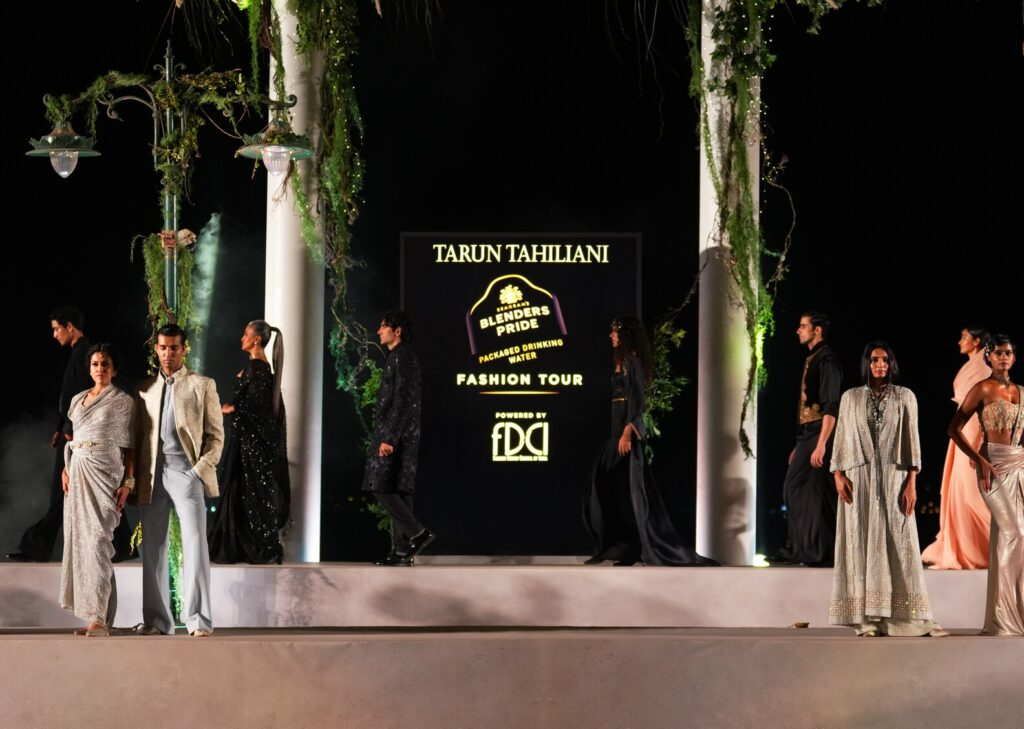
One might think that high-fashion platforms, which are inherently about trends, would be at odds with the slow fashion movement. However, events like the Blenders Pride Fashion Tour are proving that style and substance can coexist beautifully.
While showcasing cutting-edge designs, this year’s Blenders Pride Fashion Tour consistently highlighted designers whose work embodies the core principles of slow fashion:
-
Championing Heritage and Craftsmanship:
Look at the magnificent collection, ‘Dreamscape’, by the legendary Tarun Tahiliani. His show was a masterclass in exceptional craftsmanship, reinterpreting traditional embroidery and celebrating heritage within a modern context. This is slow fashion in its most glamorous form—creating heirlooms, not disposables. Similarly, the moving tribute to the late Rohit Bal celebrated a designer whose life’s work was built on a “deep connection to Indian heritage” and “intricate craftsmanship,” reminding us of the enduring power of artisanal skill.
-
Artistry Over Mass Production:
Designer Nitin Bal Chauhan’s Chamunda collection presented at the Guwahati finale is another prime example. By reinterpreting medieval armor for modern streets with intricate hand-painted artworks, he elevates clothing to the realm of wearable art. Each piece tells a story, a far cry from the cookie-cutter designs of fast fashion.
Also Read: Traditional Wear Reshapes the Modern Fashion Runway
Redefining the Future with Innovation and Individuality
The future of fashion isn’t a simple binary choice. It also lies in innovation that pushes beyond old models. Designer Akshat Bansal’s collection for his label Bloni, showcased in Vizag, offered a glimpse into this future. By incorporating AI-generated visuals, 3D-modeled elements, and photochromatic fabrics, he demonstrated that technology can be used to create unique, multi-sensory experiences rather than simply speeding up production.
This spirit of redefinition extends to menswear. While men’s fast fashion continues to grow, designers on the Blenders Pride Fashion Tour platform are offering compelling alternatives. Abhishek Patni of NoughtOne fused streetwear with rockstar aesthetics, focusing on sophisticated, high-end construction. Pawan Sachdeva, with his collection ‘The Dis-Aligned,’ disrupted traditional forms using premium materials and innovative techniques. Together, they proved that modern menswear could be edgy and stylish without being disposable.
Conclusion: A Future We Can All Wear Proudly
The debate between fast and slow fashion isn’t about crowning a single winner. Instead, it highlights the rich diversity of choices available to the modern consumer. The reality is that both movements are powerful forces in the industry, and they are likely here to stay precisely because they cater to different needs, desires, and moments in our lives.
The allure of fast fashion is undeniable. It offers the thrill of the now—the ability to experiment with a bold fast fashion trend, to express a fleeting mood, and to participate in the excitement of an ever-changing style landscape without a significant financial commitment. For many, it is the gateway to exploring their identity through clothing, making style accessible, democratic, and fun.
On the other hand, slow fashion provides a different, more profound kind of satisfaction. It is the comfort of knowing a garment is made to last, the pride in supporting artisanal craftsmanship, and the deep connection to a piece that tells a story. It represents an investment not just in a piece of clothing, but in quality, sustainability, and a more intentional way of living.
Ultimately, the future of fashion will not be dictated by a single philosophy but will be a mosaic of individual choices. Your wardrobe is your personal narrative, and you are the author. You might find joy in a trendy, affordable piece for a specific event while simultaneously saving for a timeless, beautifully crafted coat you’ll cherish for decades. The power lies not in choosing a side, but in making a conscious choice that feels right for you.